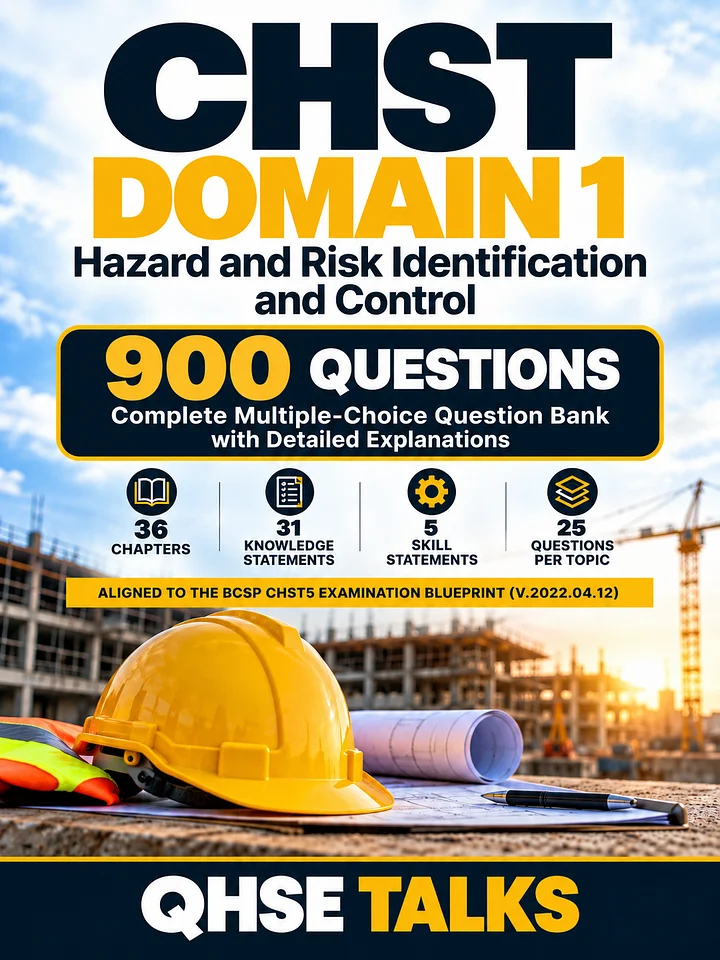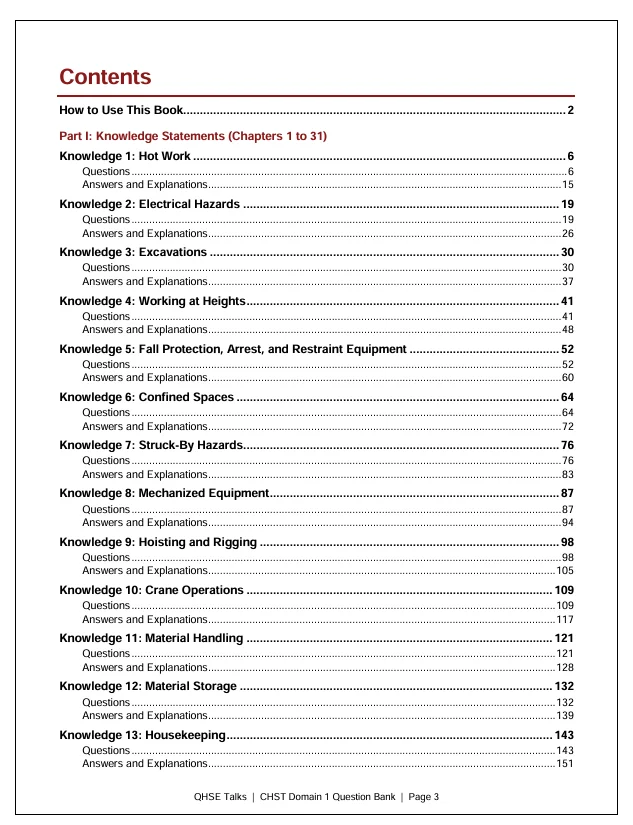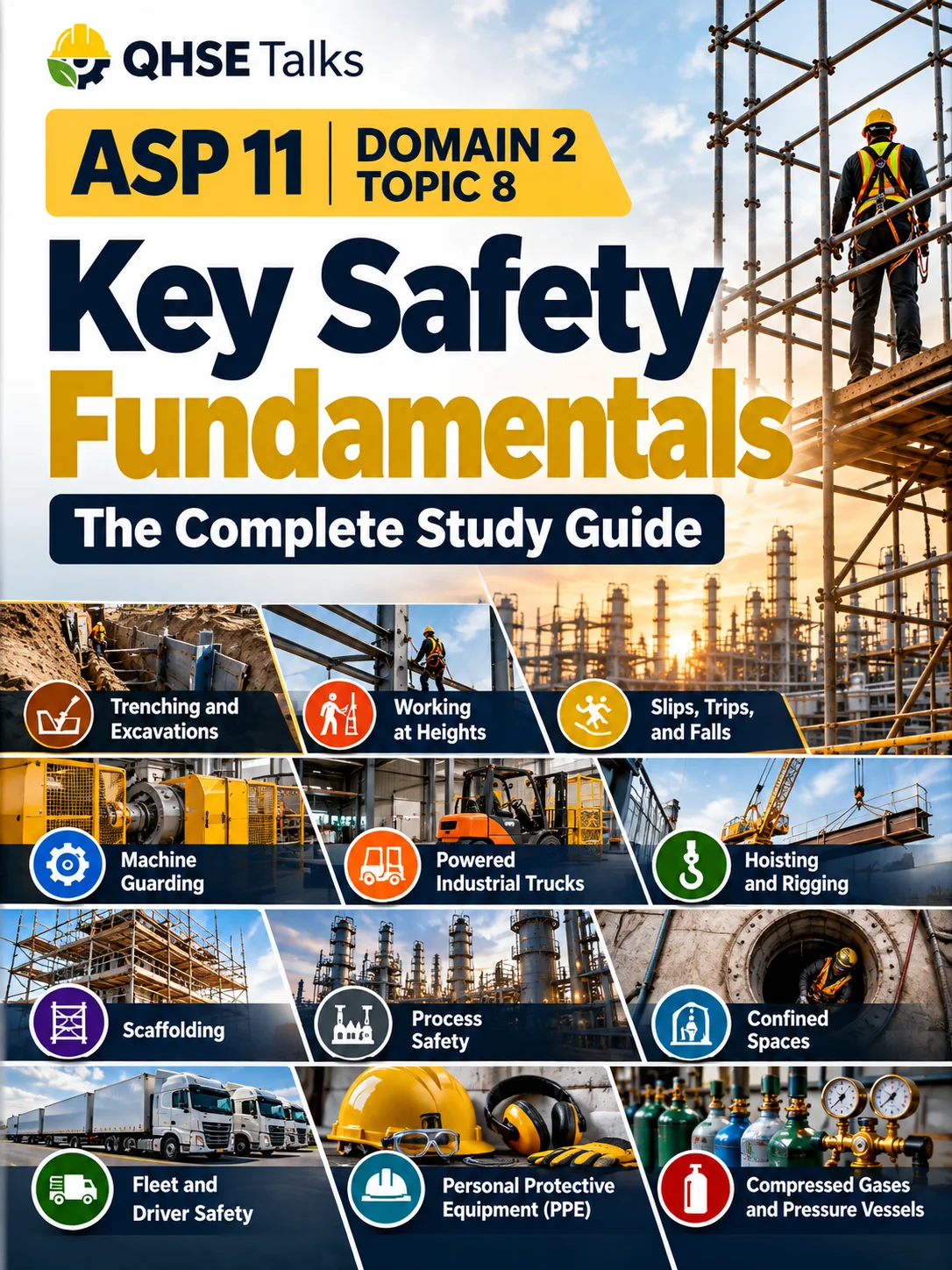
ASP 11 Domain 2, Topic 8 | Key Safety Fundamentals: The Complete Study Guide
Build Your Safety Knowledge. Strengthen Your Professional Judgment. Apply What You Learn.
Develop a deeper understanding of workplace safety with Key Safety Fundamentals: The Complete Study Guide, an approximately 800-page comprehensive resource covering ASP 11 Domain 2, Topic 8. Created by QHSE Talks, this extensive guide explores twelve essential safety areas through detailed technical explanations, regulatory requirements, practical examples, scenario-based exercises, and practice questions with answer rationales.
This book goes beyond memorizing safety rules and definitions. Its purpose is not simply to help you pass the ASP examination, but to build professional competency—the ability to recognize hazards, evaluate risks, select effective controls, interpret safety requirements, and make informed decisions in real workplace situations.
Explore 12 Essential Safety Areas
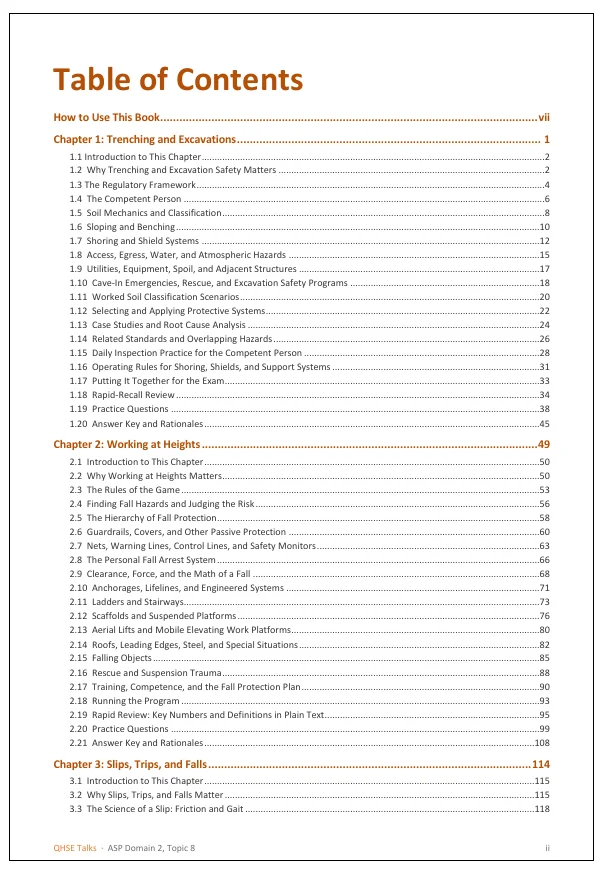
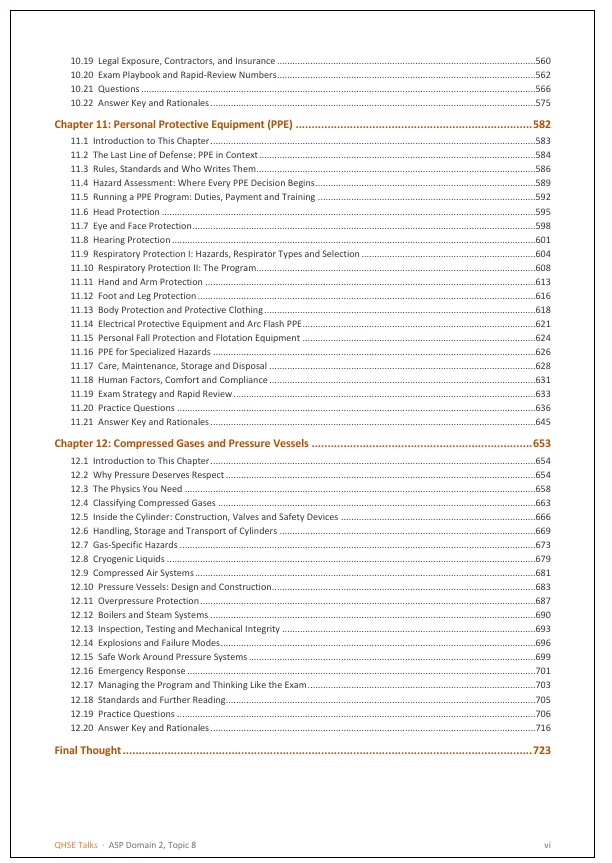
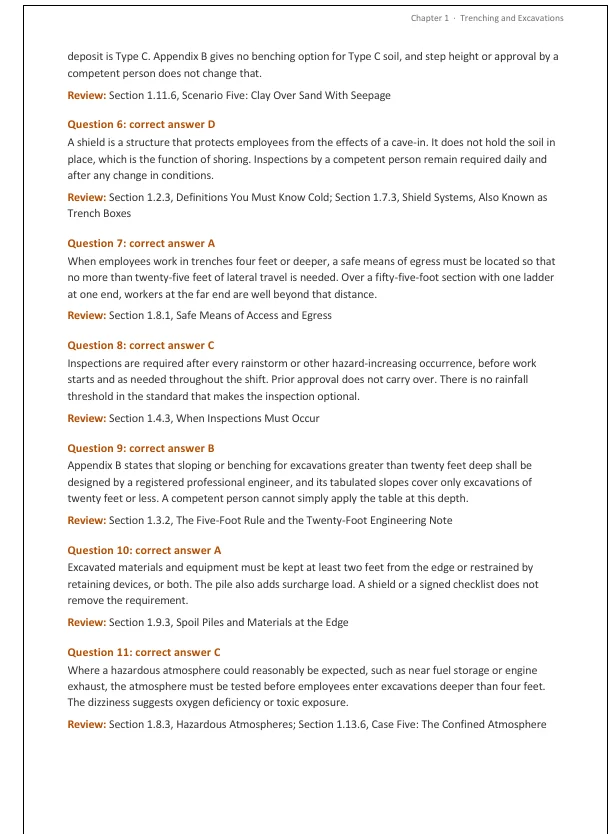
1. Trenching and Excavations: Soil classification, cave-in prevention, protective systems, and excavation inspections.
2. Working at Heights: Fall hazard assessment, fall protection systems, anchorage, ladders, and rescue planning.
3. Slips, Trips, and Falls: Walking-surface hazards, friction, housekeeping, footwear, and prevention strategies.
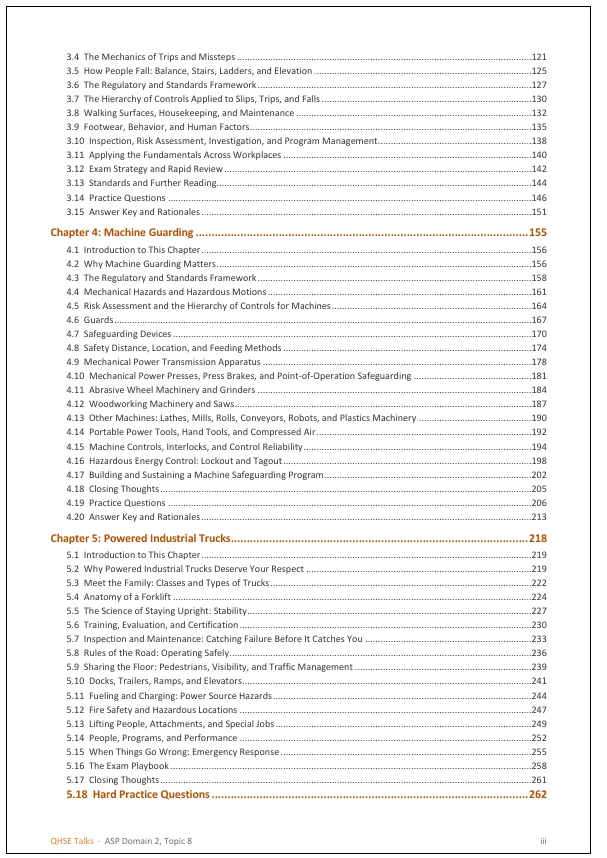
4. Machine Guarding: Hazardous machine motions, guards, safeguarding devices, safety distances, and lockout/tagout.
5. Powered Industrial Trucks: Forklift stability, load handling, inspections, operator training, and pedestrian safety.
6. Hoisting and Rigging: Cranes, lifting equipment, sling selection, load calculations, rigging hardware, and lift planning.
7. Scaffolding: Scaffold types, stability, load capacity, fall protection, inspections, and safe access.
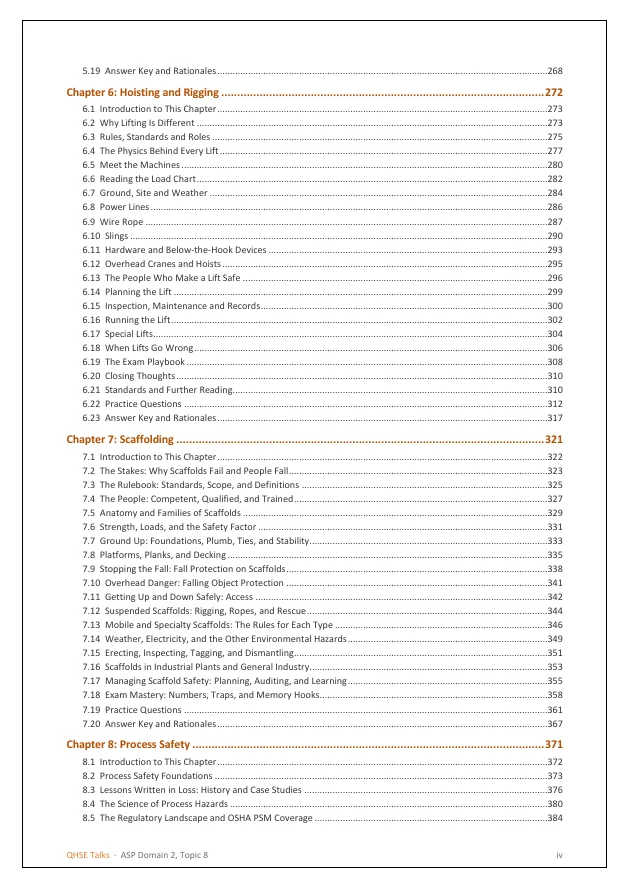
8. Process Safety: Process safety management, hazard analysis, mechanical integrity, management of change, and layers of protection.
9. Confined Spaces: Atmospheric hazards, gas testing, entry permits, hazard controls, attendant responsibilities, and emergency rescue.
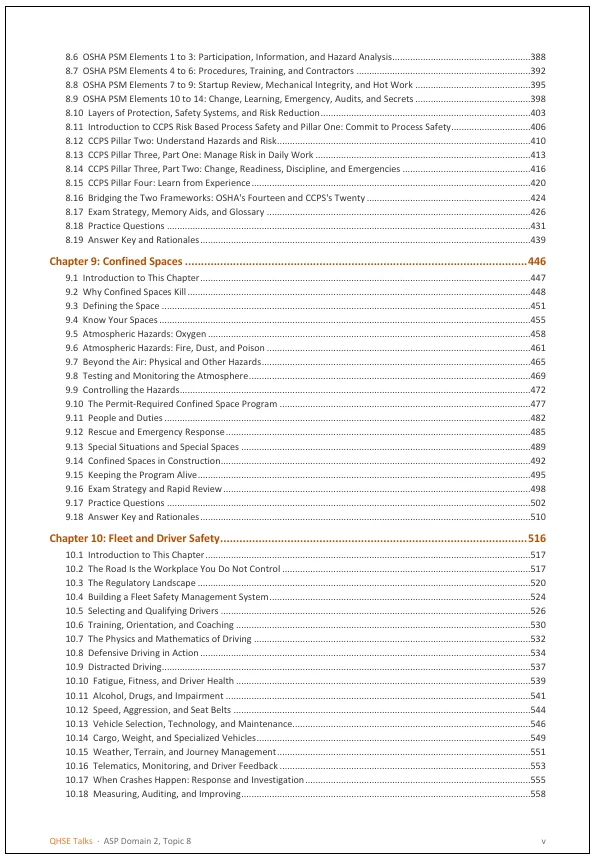
10. Fleet and Driver Safety: Defensive driving, fatigue, driver qualification, vehicle inspections, and journey management.
11. Personal Protective Equipment (PPE): Hazard assessment, PPE selection, respiratory protection, hearing protection, maintenance, and proper use.
12. Compressed Gases and Pressure Vessels: Gas hazards, cylinder handling, pressure fundamentals, relief devices, boilers, mechanical integrity, and emergency response.
A Comprehensive Resource for Professional Development
Across twelve in-depth chapters, you will find technical discussions, key regulatory concepts, worked examples, practical scenarios, common mistakes, examination-focused reviews, and detailed explanations designed to strengthen understanding. Each chapter concludes with practice questions and a complete answer key with rationales, helping you evaluate your knowledge, identify gaps, and revisit difficult concepts.
Who Is This Book For?
This guide is suitable for ASP candidates, aspiring safety professionals, HSE officers, safety engineers, supervisors, and experienced practitioners who want to strengthen their understanding of fundamental occupational safety topics.
Use it to develop your technical foundation, reinforce your knowledge through structured practice, and improve your ability to apply safety principles to workplace conditions.
The real measure of safety knowledge is not what you can memorize, but what you can recognize, evaluate, and apply when it matters.
About QHSE Talks
QHSE Talks develops educational resources to help safety professionals build technical knowledge, strengthen practical understanding, and continue their professional development.
This is an independent educational resource and is not affiliated with or endorsed by the Board of Certified Safety Professionals (BCSP).