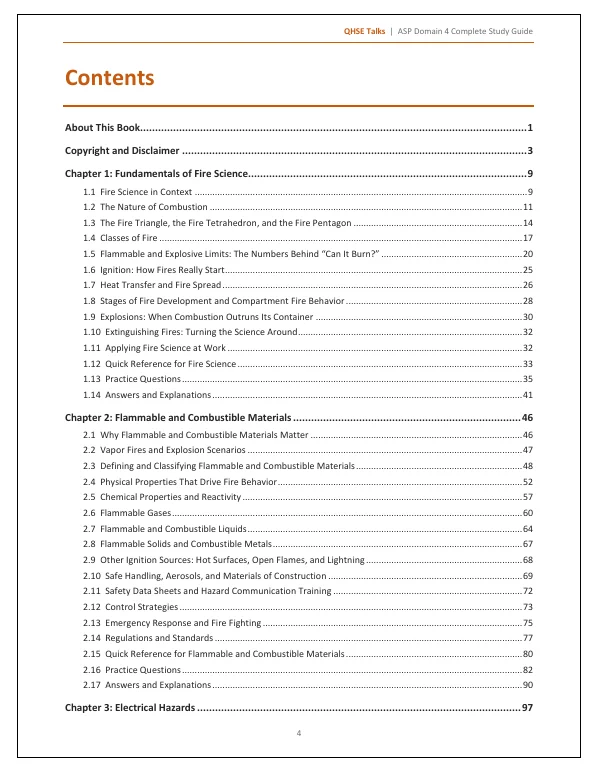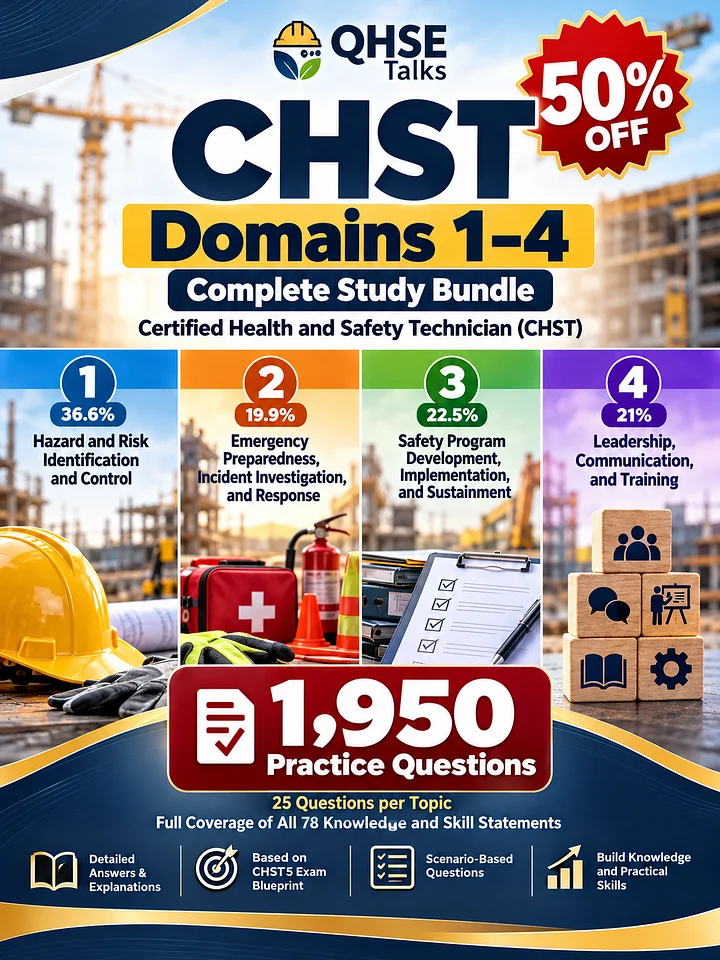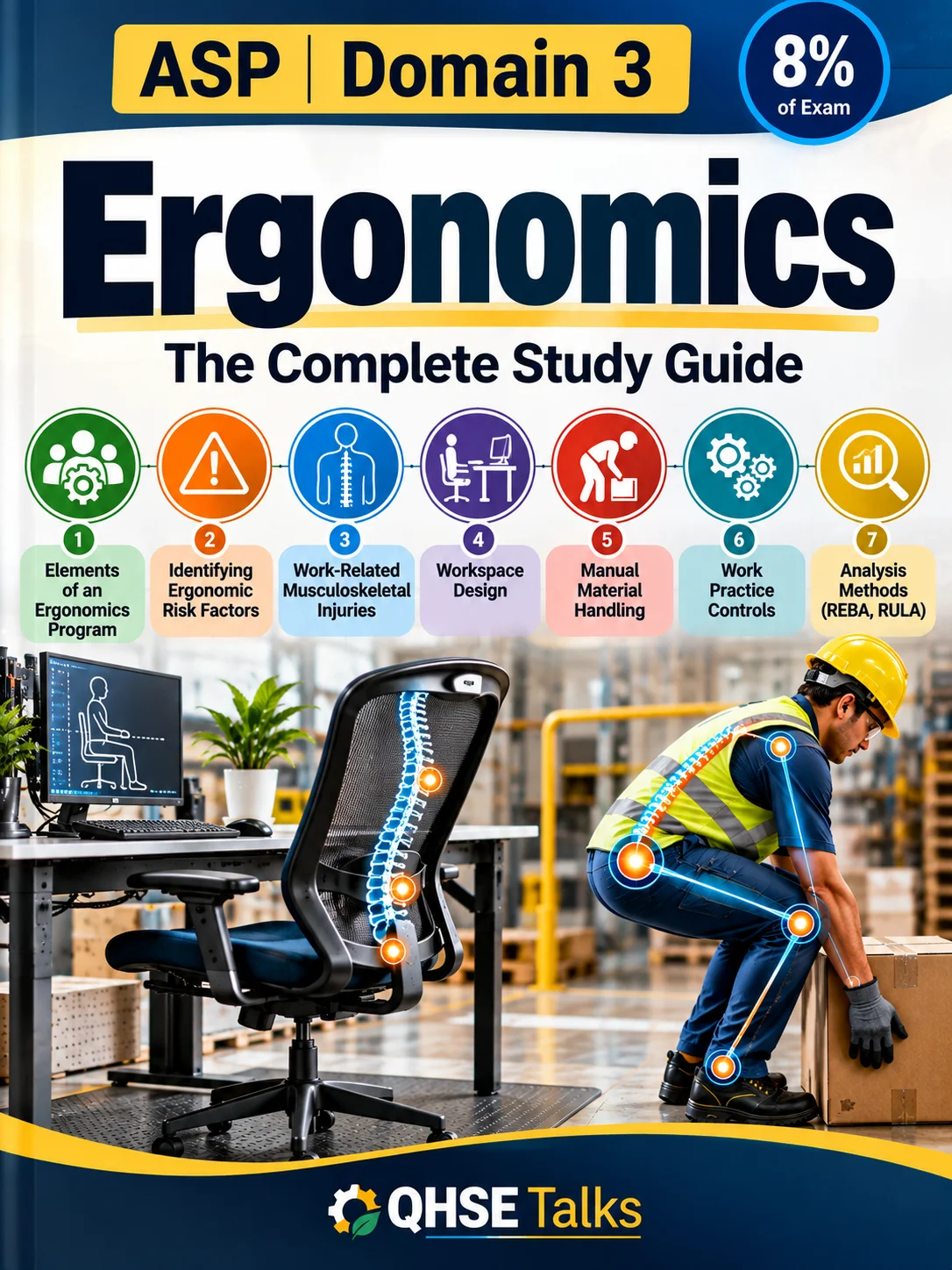
ASP Domain 3: Ergonomics (8%)– Complete Study Guide | ASP 11 Exam Preparation | QHSE Talks
Prepare for the Associate Safety Professional (ASP) examination with the ASP Domain 3: Ergonomics – Complete Study Guide by QHSE Talks.
This comprehensive study guide is designed for ASP candidates and safety professionals seeking a structured, in-depth understanding of workplace ergonomics.
Rather than focusing on memorizing definitions and formulas, this guide develops your understanding of ergonomic principles, workplace risk factors, musculoskeletal disorders, ergonomic controls, and assessment methodologies. It connects theoretical knowledge with practical workplace applications and the professional judgment needed to evaluate unfamiliar situations.
WHAT YOU WILL LEARN
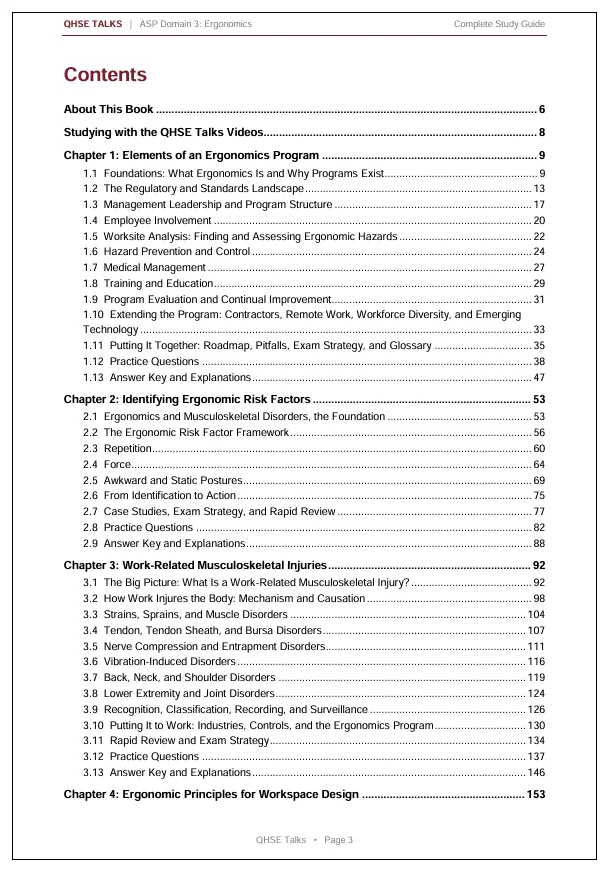
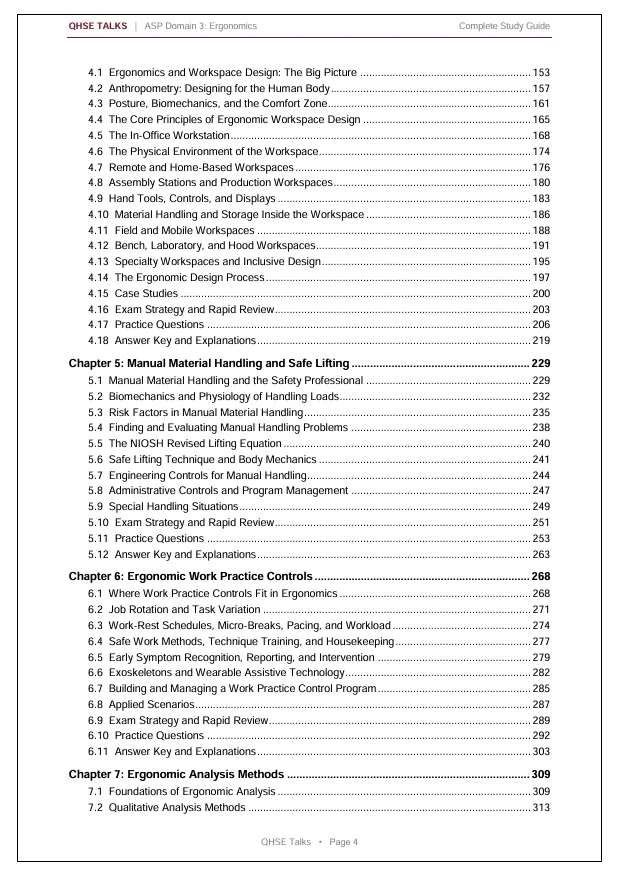
Chapter 1 – Elements of an Ergonomics Program
Understand the foundations of ergonomics, management commitment, employee involvement, worksite analysis, hazard prevention and control, medical management, training, program evaluation, and continual improvement. Explore the regulatory and standards landscape and the integration of ergonomics into occupational health and safety management systems.
Chapter 2 – Identifying Ergonomic Risk Factors
Learn to identify and assess the major ergonomic risk factors, including repetition, force, awkward postures, and static postures. Understand exposure intensity, frequency, duration, recovery periods, and how these factors contribute to musculoskeletal injury risks.
Chapter 3 – Work-Related Musculoskeletal Injuries
Explore work-related musculoskeletal disorders (MSDs), their mechanisms, contributing factors, and effects on different body structures. Study muscle strains, sprains, tendon disorders, nerve compression, vibration-related disorders, back injuries, and conditions affecting the neck, shoulders, and lower extremities.
Chapter 4 – Ergonomic Principles for Workspace Design
Understand anthropometry, body dimensions, posture, biomechanics, workstation arrangement, seating, reach distances, displays, hand tools, and workspace optimization. Explore ergonomic design principles for offices, production areas, laboratories, remote workstations, and other work environments.
Chapter 5 – Manual Material Handling and Safe Lifting
Study the biomechanics of lifting, carrying, pushing, and pulling. Understand manual material handling risk factors, assessment methods, safe lifting practices, engineering controls, and administrative controls. Includes detailed coverage of the Revised NIOSH Lifting Equation.
Chapter 6 – Ergonomic Work Practice Controls
Explore job rotation, task variation, work-rest schedules, micro-breaks, workload management, safe work methods, housekeeping, early symptom recognition, and intervention. Understand the role of exoskeletons and wearable assistive technology in ergonomic risk management.
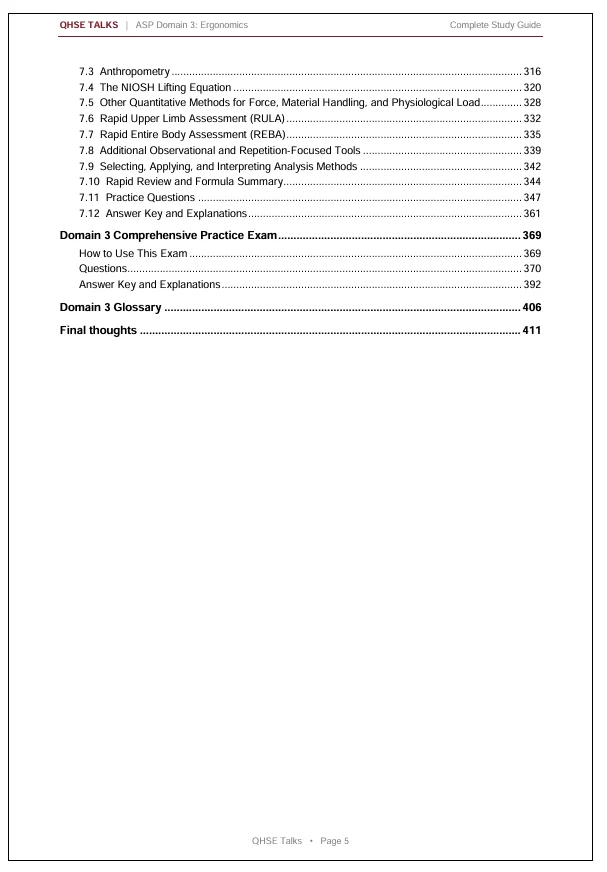
Chapter 7 – Ergonomic Analysis Methods
Develop your understanding of ergonomic assessment and measurement techniques, including qualitative analysis, anthropometry, biomechanical and physiological methods, the Revised NIOSH Lifting Equation, RULA (Rapid Upper Limb Assessment), REBA (Rapid Entire Body Assessment), and other observational and repetition-focused assessment tools.
WHAT IS INCLUDED IN THIS STUDY GUIDE?
-
Seven comprehensive chapters covering all seven ASP Domain 3 topics.
-
Topic-specific practice questions to reinforce learning.
-
Answer keys with detailed explanations.
-
References to relevant book sections for reviewing incorrect answers.
-
A 100-question comprehensive ASP Domain 3 practice examination.
-
Comprehensive answers and explanations for the final examination.
-
A dedicated ergonomics glossary.
-
Exam-focused guidance, key takeaways, rapid reviews, and worked learning examples.
THE QHSE TALKS PHILOSOPHY
The objective is not simply to help you memorize information for an examination. It is to develop the technical understanding and professional judgment required to recognize hazards, evaluate risks, select appropriate controls, and make defensible safety decisions.